
11 May 2026
How Robotic Surgery Is Changing What It Means to Be a Surgeon | Mark Slack
Watch or listen on your favourite platforms


Episode Summary
In 10 to 15 years, today's operating theatre may look just as primitive as open surgery did a generation ago. That future is arriving faster than anyone expected.
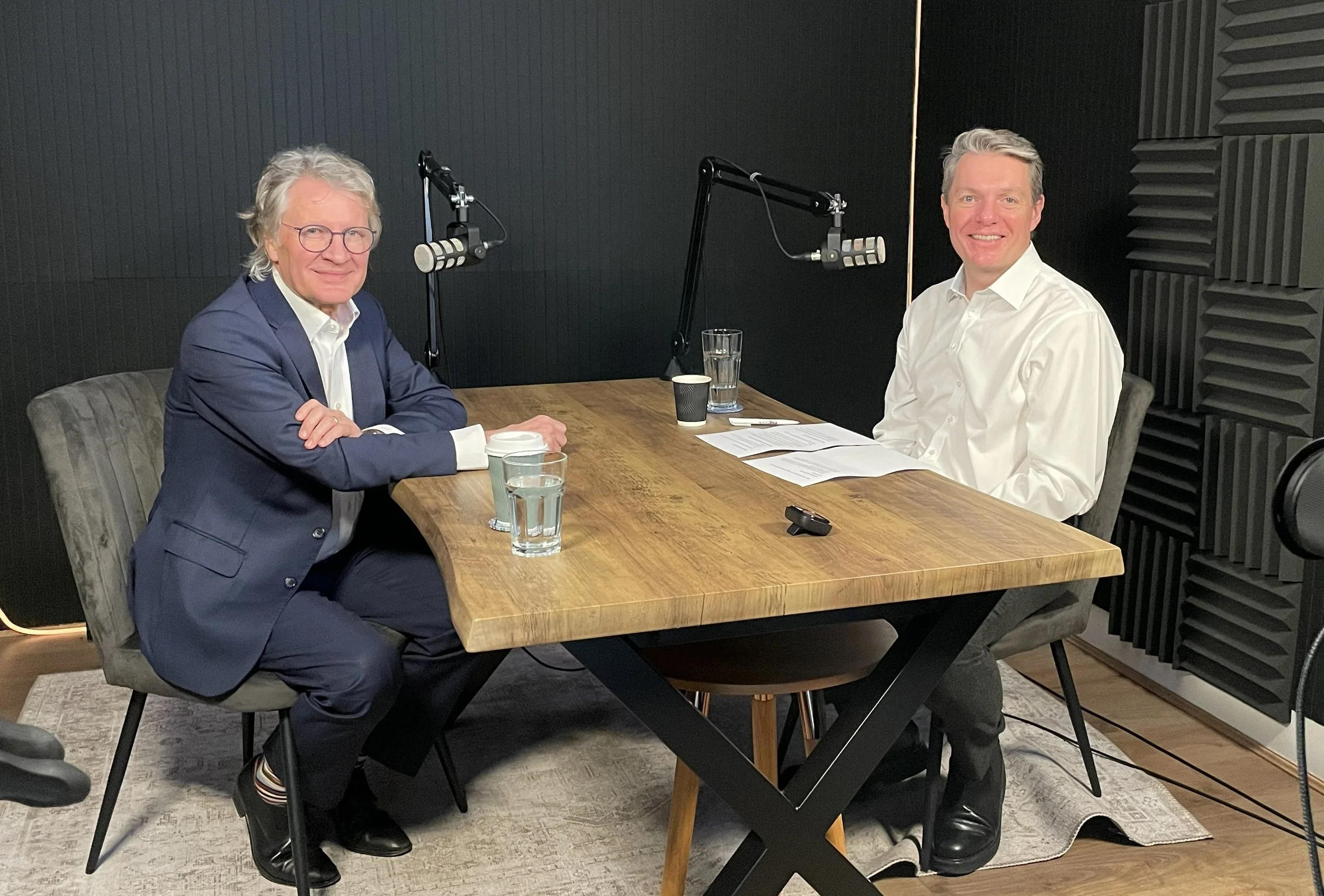
In this episode of Health in Hyperdrive, Dominic James sits down with Mark Slack, Chief Medical Officer and co-founder of CMR Surgical, for a conversation that could change how you think about the future of medicine. They cover the crisis in surgical training, why 60% of patients still don't get the surgery they should, how robotic systems are compressing decades of skill development into weeks, and what happens when you combine millions of surgical data points with AI. Mark also shares the remarkable story of building a surgical robot from scratch in five years, and offers a vision of the operating theatre in 2040 that is more radical, and more imminent, than most people realise.
10x faster surgical training. 50% fewer complications with keyhole surgery. Clinical trials at 1/10th the cost using real world evidence. Robotics is how we get there for everyone.
Key Topics Covered
Why millions of patients are still getting the wrong surgery, and what it's costing them and the system
How robotics is turning a 60 hour training task into 30 minutes, and what that means for the future of surgical skill
How five people went from a sketch to operating on a human in five years, one of the fastest robot builds in medical history
Why robotic surgery is better for patients, better for surgeons, and better for the bottom line
Millions of data points, real world evidence, and just the beginning of what robotics and AI can unlock
How AI is creeping into the operating theatre, and how far it might go
The 10 to 15 year vision, and why the surgeon of the future might look nothing like the surgeon of today
Links
Mark's LinkedIn - https://www.linkedin.com/in/mark-slack-3b8a2139/
CMR Surgical website - https://www.cmrsurgical.com
First child in the UK to have robotic surgery - Guy's and St Thomas' NHS - https://www.guysandstthomas.nhs.uk/news/london-first-revolutionary-robotic-surgery-children
The IDEAL framework for surgical innovation - BMJ - https://pmc.ncbi.nlm.nih.gov/articles/PMC3685515/
The role of Versius in paediatric surgery - PMC research paper - https://pmc.ncbi.nlm.nih.gov/articles/PMC9222178/
Dominic's LinkedIn - https://www.linkedin.com/in/dominicjames
Health in Hyperdrive website - https://www.healthinhyperdrive.com
Socials TikTok / X / Insta / YouTube - @DomJamesHiH
Produced by Explosive Brands - https://www.explosivebrands.com/

About Mark
Chief Medical Officer and co-founder of CMR Surgical
A gynaecological surgeon trained in South Africa and based for most of his career at Cambridge University, Mark spent decades teaching, researching, and pioneering new operations before co-founding CMR in 2014.
He is one of the world's foremost voices on the future of robotic and minimally invasive surgery.